
In Russia, the escort industry doesn’t operate in the shadows like it does in many Western countries-it exists in plain sight, wrapped in layers of cultural nuance, economic necessity, and unspoken social rules. You won’t find neon signs or billboards advertising services, but you’ll see the signs in the way women walk into upscale cafes in Moscow after work, or how a quiet phone call at 10 p.m. can arrange a meeting in a well-lit apartment near St. Petersburg’s Nevsky Prospekt. This isn’t just about sex. It’s about survival, status, and the quiet negotiation between old values and new realities. For many, it’s a way to afford rent in a city where salaries haven’t kept up with inflation since 2020. For others, it’s a path to reclaim control in a society that still expects women to be quiet, obedient, and financially dependent.
Some foreigners searching for companionship abroad stumble upon call girl service in dubai and assume Russia works the same way. But the comparison falls apart fast. Dubai’s industry thrives on luxury, discretion, and high-end branding. Russia’s version is rawer, more personal, and deeply tied to everyday life. There’s no app-based booking system dominating the scene. No corporate agencies with glossy websites. Instead, word-of-mouth, Telegram channels, and trusted friends still move most transactions. A woman in Kazan might post a photo of herself in a coat and boots on a local forum, with a number hidden in the caption. That’s her profile. That’s her business.
The Two Faces of Russian Escort Work
There are two main types of women working in this space, and they rarely overlap. The first group consists of university students, young professionals, and single mothers who use escorting as a side hustle. They work part-time, often only on weekends or after their day jobs. They don’t see themselves as sex workers-they’re tutors, translators, or office assistants who need extra cash. Their clients are usually local men in their 30s to 50s who want conversation, companionship, and intimacy without the pressure of a long-term relationship. The second group includes women who have made escorting their full-time career. These are often women with higher education, fluent in English or German, and they cater to international clients. They live in central Moscow or Saint Petersburg apartments, charge $200-$500 per hour, and operate like boutique service providers. They don’t advertise publicly. They build trust slowly, through referrals and encrypted messages.
Why Tradition Still Shapes the Industry
Russia has never fully embraced the Western idea of sexual liberation. Public discourse around sex remains conservative, even as private behavior evolves. Many women who work as escorts still live with their parents. They hide their work from relatives. They change their names on social media. They avoid posting selfies with clients. This isn’t just fear of judgment-it’s survival. A woman caught being seen with a client in a small town could lose her job, her reputation, even custody of her children. Yet, despite this, the demand hasn’t dropped. In fact, it’s grown. After the 2022 sanctions, many middle-class families saw their incomes shrink. Women turned to escorting not out of choice, but out of necessity. And men? They’re not looking for prostitutes. They’re looking for someone who listens, who remembers their birthday, who doesn’t ask for love but gives warmth anyway.
The Role of Technology and Social Media
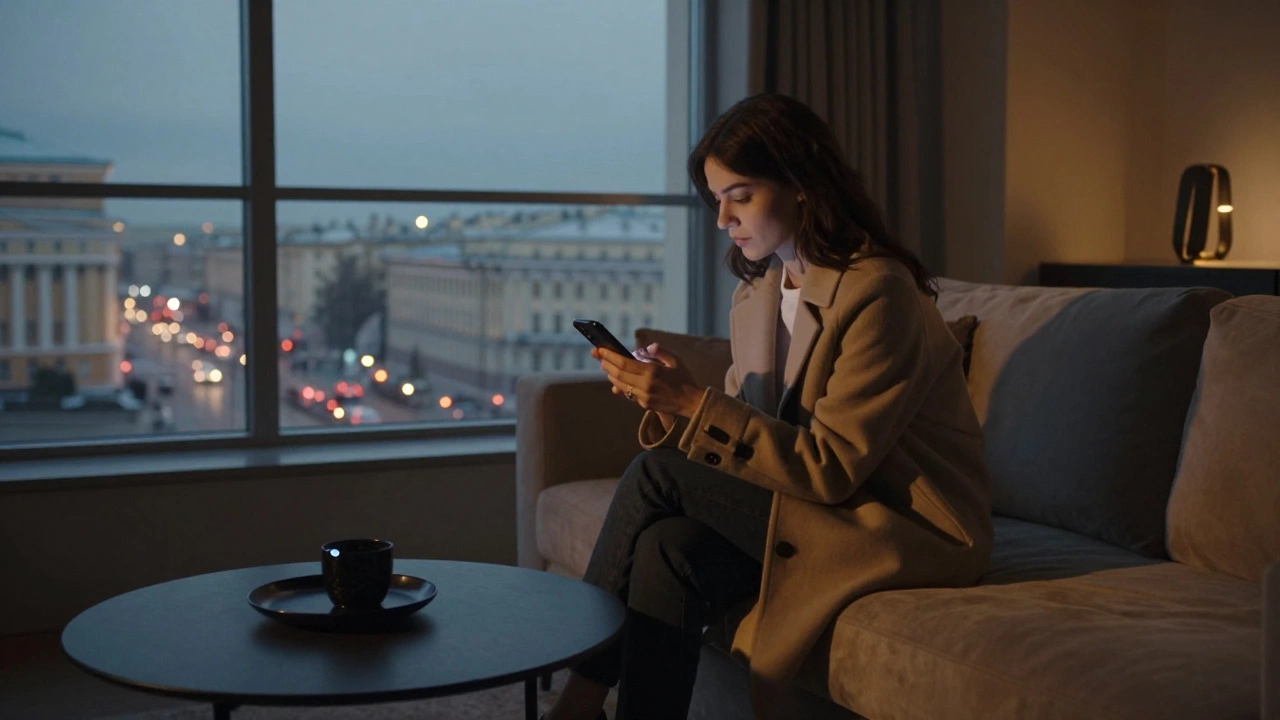
While the industry remains low-tech compared to places like the U.S. or the UK, technology has quietly changed how it operates. Instagram and VKontakte (Russia’s version of Facebook) are used as portfolios. A woman might post a photo of herself at a café, wearing a silk blouse and holding a coffee cup. No explicit content. No captions that scream "escort." Just elegance. A client sees it, saves it, and sends a message. Telegram is the real engine. Channels with names like "Moscow Evening" or "Saint Petersburg Companion" have thousands of subscribers. Posts are brief: "Available Friday, 7 PM. Quiet apartment near Krasnaya Presnya. $300." No photos. No contact info. You reply with your number, and if you’re vetted, you get a response. The system is self-policing. Clients who behave badly get blacklisted. Women who don’t show up get removed from lists. Trust is currency.
How This Differs From Western Models
In the U.S. or Canada, escort services are often marketed as luxury experiences-spa packages, romantic dinners, private jets. In Russia, it’s the opposite. The experience is intimate, quiet, and often takes place in a rented studio apartment or a client’s home. There’s no champagne. No rose petals. Just a shared meal, a few hours of conversation, and sometimes, sex. The emotional component is key. Many clients say they come back not for the physical contact, but because they feel heard. One man in Yekaterinburg told a journalist in 2024, "I don’t need a girlfriend. I need someone who doesn’t ask why I’m quiet at dinner." That’s the real product here: emotional presence.
And unlike in places where "prostitute near me" searches lead to predatory websites, Russian escort work rarely involves street-based solicitation. There are no known cases of women being forced into the trade by organized crime in recent years, according to local NGOs that track human trafficking. Most women enter the industry voluntarily, with full awareness of the risks. They know the law is on the books-prostitution is technically illegal-but enforcement is inconsistent. Police rarely raid apartments unless there’s a complaint. The system runs on silence.

What Clients Really Want
Most clients aren’t looking for a quick hook-up. They’re looking for a break from loneliness. Russia has one of the highest rates of male depression in Europe, and marriage rates have dropped sharply since 2015. Men in their 40s and 50s often feel invisible. They’re not rich enough to be seen as desirable, not young enough to be exciting. An escort offers them dignity. She doesn’t pity them. She doesn’t try to fix them. She just shows up. Some clients pay for weekly visits. Others only come once a year, on their birthday. One woman in Novosibirsk said she’s had the same client for seven years. He never asks for sex. They talk about books. He brings her tea. She remembers his dog’s name. That’s the relationship.
The Future of the Industry
With inflation still hovering above 7% and the ruble volatile, the demand for this kind of companionship isn’t going away. Younger women are entering the space with more confidence. Some are starting blogs, offering advice on how to stay safe, how to set boundaries, how to avoid scams. A few have even launched small businesses-offering language lessons, personal styling, or even therapy-style sessions alongside companionship. The line between escort and companion is blurring. And that’s where the future lies. Not in hidden rooms or illicit deals, but in redefining what connection means in a country that still doesn’t talk openly about intimacy.
Some may call it exploitation. Others see it as empowerment. The truth is somewhere in between. It’s messy. It’s real. And it’s not going anywhere.